Featured

What’s New? Nothing? Or Everything?

The global pandemic has given us time to pause and think. Our normal lives have been interrupted, and many people in business have had to be fast on their feet to try and keep trading.

But now that we are seeing a move towards what was normal, the question to ask is, do we want to go back to the way things were done before Coronvairus, or is this an opportunity to reflect and improve?

Throughout history, major change has been brought about by innovation. The lives of the ordinary person in Europe was not significantly improved by the removal of serfdom until the arrival of the steam engine and the Industrial Revolution that followed. Whereas 90% of the workforce had been in agriculture, within 50 years that had switched around as people moved to the cities to work in factories. The arrival of the railways in the Victorian Age saw huge growth in manufactued goods as the ability to transport them around the country totally changed. Meanwhile luddites were trying to stop new working practices, and machinery was attacked to prevent the new.

Then in the 20th Century manufacuring jobs were surpassed by services. Automation, from the assembly line introduced by Henry Ford, to the development of interchangeable parts meant that industry no longer needed as many people, and costs were reduced by investment in technology.

Consumer goods from the 1950s have been the lifeblood of the economy. Television, white goods, cars and the resulting change in travel, then flight becoming a commodity not a luxury saw tourism move from local to international.

The latest changes are in technology itself. Computers became handheld devices, and everything has become digital, changing more and more every day. It has been an incremental development, as we got used to Erickson and Nokia phones, we were ready for the iPhone and the revolution in communication.

But the adoption of new technology is being resisted, and there are many that want us to stay in the past, returning to the ways of working that began in the 1850s with rail travel and then became motor car driven.

Opening hours, set in the late 19th Century, are still kept to by businesses that can surely see that their customers want flexiblity? Travel taking up millions of hours of potential productivity every day is being promoted, when only a year ago people were being advised to spend less time in their cars to reduce the damage to the environment. Offices that are a cost to businesses that are finding it hard to keep afloat are being promoted as the only place to work, so that the workforce is in the right place to buy coffee and sandwiches.

So what is new? What opportunities exist with new tech?

Working hours? Should they suit the company and the employees, or retailers and restaurants? And should the company and the employees also be flexible for their customers? So if I want to consult a law firm or an accountancy practice, should I suit them, or they suit me? The Northern Ireland Business Facebook Group is active from morning to night, so I am seeing flexibility in small businesses, and opportunity for service companies to be flexible. Does a store owner want to take time out of the trading day to visit their accountant? Should they have to visit at all? Whereas phone calls are seen as normal practice, Zoom or Teams is being luddited as “not the same as meeting in person”. A fakery that suits the argument but is not real.

The rejection of the new is not limited to us locally. We are living in a world where history lite is used to remind us of the past almost every day. Anniversaries of this event or that, with the rose tinted glasses that blind us to the fact that the past was not a very comfortable place. The ‘Fifites are presented as safe and secure, with nothing to remind of the social divisions, rationing, relaxed racism and sheer drudgery for women who had to “run” the home, while men ruled the roost.

Brexit is a backward looking process, a last hurrah for those that believe that the Great in Great Britain is real and not now exceptionalism that is no longer warranted, if it ever was for those that were the factory fodder and not the wealthy owning class.

So what might new look like?

Local stores selling locally produced goods priced realistically for both customer and producer? Will people pay more for less? If the quality is there, yes. Stores and restaurants realising that they are in this together and arranging opening hours that will benefit both? Home workers being encouraged to use the time they have saved not commuting to go and enjoy themselves. Mangement using Task and Trust, setting tasks and trusting the people to get it done, properly, by a set time, when it suits the workers. Then they can put in the hours to suit themelves and perhaps have a four day week, which means, hurrah, they can go shopping and eating! High Streets removing traffic and creating piazzas, with awnings and heaters? Services zooming and chatting whenever the client is available, within set times, with shifts for call answering, from home. Cars removed from the equation, with public transport being the norm, and driving seen as the luxury that it is, to reduce the envirnmental damage.

And that is only me picking up ideas from the Facebook Group. Set free the innovation and creativity that is out there to challenge and change. Technology that frees us from having to watch TV programmes at certain times can be used to free us to choose how our own lives are managed.

So is this the time? Looking forward and not back? Innovating rather than revisiting? Creating the new and not dusting off the old? You may have guessed where I am on this…
Audience First – They’re the Important People

Audience First Marketing is the system I have developed to create successful marketing campaigns in the modern media world.

It has been developed through applying a lot of experience and research into people and how they behave.

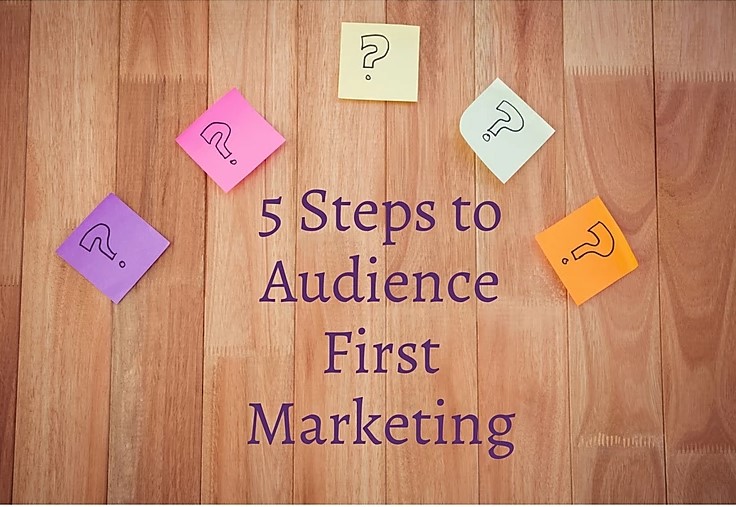
Here are the 5 Steps to Audience First Marketing

If you want further information, drop me a line.

  • Identify the target audiences. It is not one, it could be 8, but to get started you should be able to think of four types of people that you want to talk to, and who are the most likely to buy from you. Use your experience of existing customers.
  • Workshop the audiences into personas. Get together with a few friends of colleagues and think about the people, not your product. Who are they, what are they interested in, what is their status regarding age, income, interests, gender, location. Do they like sport or music, are they interested in walking or travelling, do they have children or are they downsizing?
  • Once identified, then you do a simple process: “I want – so that”. What do they want out of buying from you , and step beyond the purchase into their lives. I wrote an ad once for a software company “Once we introduced Uibol Software, my golf handicap went down to 10”. The benefit to the purchaser was that he had more time, less stress, and more happiness. Not that he had some software.
  • Use the So-That answers to create content for your audiences. Here is an example:

I want an E-Car – So that “I have less impact on the environment” – Content – Easy ways to help

the environment.

I want an E-Car – So that – “I spend less on fuel” – Content – Ways to reduce your fuels bills.

The call to action on these pieces of content takes the people to the next step of your sales process – a button that has further specific content – ie – Five things you didn’t know about e- cars.

Host the content you create on your website. When people click on the link on their social media feeds they will be brought to your sitge and then they can browse other pages and find out more about you.

  • Finally – promote the content – not the product. Share your content on social with organic posts on Facebook, Twitter, Linkedin. Pay to promote the content to your target audiences.

The Outcomes

Audience First Marketing works. Here’s why.

  • Your audiences have engaged with you
  • They know who you are
  • They have spent time with you
  • You will never be unknown to them again.
  • You have shown that you are more interested in them than your sale.

For more information, or to arrange a meeting, give me a call

The Creative Process –

Why is creativity so important in communications?

When you see something you remember it – whether that memory is conscious or subconscious can depend heavily on how you connect. Is it memorable? In my career in advertising the campaigns I worked on varied from the hard-hitting sales and promotional ads for Crazy Prices to brand and public service ads to change behaviour. They all had a creative element so that they would stand out in an ad break on TV, and messaging that would engage the viewer.

By creating a memory we are starting along the road of delivering results, to shift behaviour towards achieving the goals we have set.

Being creative is being different. There is a lot of competition out there. People control their own time and media engagement more than ever.

So how do you develop creative content?

For a start, you need to have a clear idea of what you are trying to achieve.

To do this you can follow a process, and it is all about Audience First Marketing.

First of all, think about the audience you are going to try to influence.

Who are they?

What age, gender, income bracket, family situation.

This is a top-line persona. Because within that profile there will be sub-sections that are dependent on interests, political bent, types of media they like and more.

Then with a little Agile technique, “I want – so that “ you can think about why they would buy from you? What are they getting out of the transaction? Sure they get the product or service, but is that it? Or are you giving them comfort, satisfaction, happiness, less stress, opportunities?

What are people getting when they buy a set of golf clubs? 14 sticks to hit a ball?

No.

They are getting healthy, chatting on the course, connecting to nature, socialising, satisfaction from a good shot, and the potential to get better at golf.

So engaging potential customers about golf clubs has huge potential for creative content.

Where will the audience see your content?

You have to create the right content for the media you are going to use. Too often I see press ads online. TV Ads on Facebook. Brand ads in Newsfeeds. The new digital space is being misused more often than it is done well. What does that person on Facebook want? An ad from you, or interesting content that is designed to interest them?

A bit of disruption

Another part of developing a creative strategy is using disruptive techniques. This involves research, looking at the conventions in the market and how by disrupting them you can create space for your product or service.

The hardest part of developing a creative mindset is disabling your own conventions. We are all programmed by our experiences, education and environment. There are hierarchies in meetings that prevent people from sharing their ideas. The fear of being ridiculed is high.

But think about the Cadbury’s Gorilla.

The agency team pitching it were brave, but the Marketing Director who brought it to the Board and told them that he was advising them to spend £10m on a gorilla playing the drums to a Phil Collins song deserved the equivalent of the business VC. With no chocolate to be seen. And he got them to agree and not send him for treatment.

So ask yourself.

Would you have bought that campaign?

I have had one, or maybe two clients that might have “taken the risk”. The results for Cadbury’s were incredible. The brand was shifted from being old fashioned and out of date in the face of lots of competition to being the funkiest chocolate on the shelf. Where was the risk? In choosing something that had never been seen before. By parking personal conventions.

That is what happens when people are confronted with a creative solution that they have never seen before. They reject it and revert to something that is more comfortable, and that often looks very like a competitor’s marketing and advertising. They are wary of wasting budget, and not getting the right results. If it worked for them, then it will work for me. Except that it doesn’t. It actually helps the competitor because they got there first.

By understanding the conventions that exist you are then become open to new ideas. If you look or sound the same as your competitors, then it is time to reboot. If you are challenged by a concept, that is not a reason to reject it, being uncomfortable is often the first stage of realising that you are looking at something very different. Imagine when Picasso showed his first Cubist paintings to his friends. “Pablo’s lost it now, did you see those paintings!”

Being creative and using these processes can also help in your wider business.

Disruption has led to Uber, AirB&B, Amazon, the iPhone and many more. When Steve Jobs brought the iPad to the market, Steve Ballmer of Microsoft scoffed, they had already tried that and it had failed. He was wrong, they hadn’t tried it, their product had not had the touch technology that made the iPad so tactile and engaging. And that opened the internet up to a whole new community, old people.

It may surprise a younger generation but the business world used to be divided into two, those who could type, and those that couldn’t. Older people who couldn’t type were put off using computers because of the keyboard, so when the iPad removed the need for typing, one of the fastest sales sectors was those people that could now access all the benefits of the web with touch and tap.

If you use some of the processes above when thinking about new products, new services and new markets, you can develop a clearer understanding of the opportunities in the market. With Google, you can research much more than in the past.

Creativity drives us all forward. A new movie, using amazing special effects, tells a story about dinosaurs and makes them so real you believe they exist. A band from Liverpool challenge conventions by playing some tapes backwards and make sounds that change modern music. A TV producer throws out an idea about a programme showing people watching tv, and Gogglebox is born. All these were about breaking with convention. And all of them worked.

What’s New? Nothing? Or Everything?

The global pandemic has given us time to pause and think. Our normal lives have been interrupted, and many people in business have had to be fast on their feet to try and keep trading.

But now that we are seeing a move towards what was normal, the question to ask is, do we want to go back to the way things were done before Coronvairus, or is this an opportunity to reflect and improve?

Throughout history, major change has been brought about by innovation. The lives of the ordinary person in Europe was not significantly improved by the removal of serfdom until the arrival of the steam engine and the Industrial Revolution that followed. Whereas 90% of the workforce had been in agriculture, within 50 years that had switched around as people moved to the cities to work in factories. The arrival of the railways in the Victorian Age saw huge growth in manufactued goods as the ability to transport them around the country totally changed. Meanwhile luddites were trying to stop new working practices, and machinery was attacked to prevent the new.

Then in the 20th Century manufacuring jobs were surpassed by services. Automation, from the assembly line introduced by Henry Ford, to the development of interchangeable parts meant that industry no longer needed as many people, and costs were reduced by investment in technology.

Consumer goods from the 1950s have been the lifeblood of the economy. Television, white goods, cars and the resulting change in travel, then flight becoming a commodity not a luxury saw tourism move from local to international.

The latest changes are in technology itself. Computers became handheld devices, and everything has become digital, changing more and more every day. It has been an incremental development, as we got used to Erickson and Nokia phones, we were ready for the iPhone and the revolution in communication.

But the adoption of new technology is being resisted, and there are many that want us to stay in the past, returning to the ways of working that began in the 1850s with rail travel and then became motor car driven.

Opening hours, set in the late 19th Century, are still kept to by businesses that can surely see that their customers want flexiblity? Travel taking up millions of hours of potential productivity every day is being promoted, when only a year ago people were being advised to spend less time in their cars to reduce the damage to the environment. Offices that are a cost to businesses that are finding it hard to keep afloat are being promoted as the only place to work, so that the workforce is in the right place to buy coffee and sandwiches.

So what is new? What opportunities exist with new tech?

Working hours? Should they suit the company and the employees, or retailers and restaurants? And should the company and the employees also be flexible for their customers? So if I want to consult a law firm or an accountancy practice, should I suit them, or they suit me? The Northern Ireland Business Facebook Group is active from morning to night, so I am seeing flexibility in small businesses, and opportunity for service companies to be flexible. Does a store owner want to take time out of the trading day to visit their accountant? Should they have to visit at all? Whereas phone calls are seen as normal practice, Zoom or Teams is being luddited as “not the same as meeting in person”. A fakery that suits the argument but is not real.

The rejection of the new is not limited to us locally. We are living in a world where history lite is used to remind us of the past almost every day. Anniversaries of this event or that, with the rose tinted glasses that blind us to the fact that the past was not a very comfortable place. The ‘Fifites are presented as safe and secure, with nothing to remind of the social divisions, rationing, relaxed racism and sheer drudgery for women who had to “run” the home, while men ruled the roost.

Brexit is a backward looking process, a last hurrah for those that believe that the Great in Great Britain is real and not now exceptionalism that is no longer warranted, if it ever was for those that were the factory fodder and not the wealthy owning class.

So what might new look like?

Local stores selling locally produced goods priced realistically for both customer and producer? Will people pay more for less? If the quality is there, yes. Stores and restaurants realising that they are in this together and arranging opening hours that will benefit both? Home workers being encouraged to use the time they have saved not commuting to go and enjoy themselves. Mangement using Task and Trust, setting tasks and trusting the people to get it done, properly, by a set time, when it suits the workers. Then they can put in the hours to suit themelves and perhaps have a four day week, which means, hurrah, they can go shopping and eating! High Streets removing traffic and creating piazzas, with awnings and heaters? Services zooming and chatting whenever the client is available, within set times, with shifts for call answering, from home. Cars removed from the equation, with public transport being the norm, and driving seen as the luxury that it is, to reduce the envirnmental damage.

And that is only me picking up ideas from the Facebook Group. Set free the innovation and creativity that is out there to challenge and change. Technology that frees us from having to watch TV programmes at certain times can be used to free us to choose how our own lives are managed.

So is this the time? Looking forward and not back? Innovating rather than revisiting? Creating the new and not dusting off the old? You may have guessed where I am on this…

The Creative Process

Why is creativity so important in communications?

When you see something you remember it – whether that memory is conscious or subconscious can depend heavily on how you connect. Is it memorable? In my career in advertising the campaigns I worked on varied from the hard-hitting sales and promotional ads for Crazy Prices to brand and public service ads to change behaviour. They all had a creative element so that they would stand out in an ad break on TV, and messaging that would engage the viewer.

By creating a memory we are starting along the road of delivering results, to shift behaviour towards achieving the goals we have set.

Being creative is being different. There is a lot of competition out there. People control their own time and media engagement more than ever.

So how do you develop creative content?

For a start, you need to have a clear idea of what you are trying to achieve.

To do this you can follow a process, and it is all about Audience First Marketing.

First of all, think about the audience you are going to try to influence.

Who are they?

What age, gender, income bracket, family situation.

This is a top-line persona. Because within that profile there will be sub-sections that are dependent on interests, political bent, types of media they like and more.

Then with a little Agile technique, “I want – so that “ you can think about why they would buy from you? What are they getting out of the transaction? Sure they get the product or service, but is that it? Or are you giving them comfort, satisfaction, happiness, less stress, opportunities?

What are people getting when they buy a set of golf clubs? 14 sticks to hit a ball?

No.

They are getting healthy, chatting on the course, connecting to nature, socialising, satisfaction from a good shot, and the potential to get better at golf.

So engaging potential customers about golf clubs has huge potential for creative content.

Where will the audience see your content?

You have to create the right content for the media you are going to use. Too often I see press ads online. TV Ads on Facebook. Brand ads in Newsfeeds. The new digital space is being misused more often than it is done well. What does that person on Facebook want? An ad from you, or interesting content that is designed to interest them?

A bit of disruption

Another part of developing a creative strategy is using disruptive techniques. This involves research, looking at the conventions in the market and how by disrupting them you can create space for your product or service.

The hardest part of developing a creative mindset is disabling your own conventions. We are all programmed by our experiences, education and environment. There are hierarchies in meetings that prevent people from sharing their ideas. The fear of being ridiculed is high.

But think about the Cadbury’s Gorilla.

The agency team pitching it were brave, but the Marketing Director who brought it to the Board and told them that he was advising them to spend £10m on a gorilla playing the drums to a Phil Collins song deserved the equivalent of the business VC. With no chocolate to be seen. And he got them to agree and not send him for treatment.

So ask yourself.

Would you have bought that campaign?

I have had one, or maybe two clients that might have “taken the risk”. The results for Cadbury’s were incredible. The brand was shifted from being old fashioned and out of date in the face of lots of competition to being the funkiest chocolate on the shelf. Where was the risk? In choosing something that had never been seen before. By parking personal conventions.

That is what happens when people are confronted with a creative solution that they have never seen before. They reject it and revert to something that is more comfortable, and that often looks very like a competitor’s marketing and advertising. They are wary of wasting budget, and not getting the right results. If it worked for them, then it will work for me. Except that it doesn’t. It actually helps the competitor because they got there first.

By understanding the conventions that exist you are then become open to new ideas. If you look or sound the same as your competitors, then it is time to reboot. If you are challenged by a concept, that is not a reason to reject it, being uncomfortable is often the first stage of realising that you are looking at something very different. Imagine when Picasso showed his first Cubist paintings to his friends. “Pablo’s lost it now, did you see those paintings!”

Being creative and using these processes can also help in your wider business.

Disruption has led to Uber, AirB&B, Amazon, the iPhone and many more. When Steve Jobs brought the iPad to the market, Steve Ballmer of Microsoft scoffed, they had already tried that and it had failed. He was wrong, they hadn’t tried it, their product had not had the touch technology that made the iPad so tactile and engaging. And that opened the internet up to a whole new community, old people.

It may surprise a younger generation but the business world used to be divided into two, those who could type, and those that couldn’t. Older people who couldn’t type were put off using computers because of the keyboard, so when the iPad removed the need for typing, one of the fastest sales sectors was those people that could now access all the benefits of the web with touch and tap.

If you use some of the processes above when thinking about new products, new services and new markets, you can develop a clearer understanding of the opportunities in the market. With Google, you can research much more than in the past.

Creativity drives us all forward. A new movie, using amazing special effects, tells a story about dinosaurs and makes them so real you believe they exist. A band from Liverpool challenge conventions by playing some tapes backwards and make sounds that change modern music. A TV producer throws out an idea about a programme showing people watching tv, and Gogglebox is born. All these were about breaking with convention. And all of them worked.

The Media Revolution…Everything is Different

When do you get old enough and experienced enough to say your bit and risk offending just about everyone involved in marketing? Well, I think 62, with 40+ years experience is the moment. Have a look at my profile and you’ll see I’ve earned my spurs, so I am not going to pussyfoot about.

If you are open-minded, then you may take this on board, if you are in a closed loop of thinking, then you may well take what I say, bin it and never consider it again.


We have been through nothing less than a revolution in the past ten years. A worldwide revolution that has had more impact than the Russian Revolution in 1917. A communications revolution.

Ten years ago, we were at the beginning. Mobile phones were becoming smartphones. Early adopters were being joined by more and more people who were quickly adapting their lives to the digital age of handheld internet fed by wifi and then in 2013, 4G. A smartphone was no longer a luxury, it was a necessity. You need one to keep in contact with your friends and to do your work. Texting became messaging and YouTube was joined by Netflix and then Amazon Prime. The television became a smart tv, with numerous choices on the remote.


Newspapers are in terminal decline, with young people not developing the reading habit. Radio has held its own but is facing competition from the arrival of Amazon Echo technology in cars, and the Google Home Mini joining the Echo in the home.

And this is happening all around the world.

The revolution in communication has resulted in a revolution in behavioural change. People are doing things differently because they have complete control over what media they use, where they use it, and when.


So has there been a marketing revolution to match the change in communications and behaviour?

No.

Of course, there has been a change. But I still see marketing communications based around ads. I see ads put on the digital channels, but too often they are ads that should be used on TV, not on social media or games. I see ads that should be in newspapers being put onto Facebook or Twitter, getting in the way of my feed. I then click through to the most boring content that is written as if it is for an ad in a trade magazine. And usually overwritten at that.


Have companies that need good marketing changed to meet this revolutionary change?

No. I know this for a fact. I spoke to a potential client, and he talked to their marketing team. He got back, they are not interested, they are doing it all right, they don’t need any more input. Yet when I look at their marketing, it is, well to be honest, as boring as a really boring thing, and will do nothing to change people’s view of their brand (it is one of the big four accountancy practices in Belfast). Would I go as far as to say that it is bound by conventions, lacks innovation, and endorses the current view of the brand rather than changing it?

What do you think?


So the revolution is being ignored. Marketing is not adapting to change or opportunities. The revolution means that the individual is at the core of all potential success. That person on their smartphone on the bus is watching what they want to watch. That child at home is not looking at the same thing as their Mum, Dad, brother or sister. They are also avoiding the ads. How do I know, because, given the option, people will avoid ads.


And after Brexit and the Coronavirus, there are companies that need to look at new markets but are not buying into the revolution. They are thinking they know how the world works, despite all the evidence to the contrary. A closed loop.

Marketing that thinks the individual is interested in you is marketing that will not work. Marketing that makes the individual think you are interested in them, will.


I hear the words traditional and digital. Forget that, All advertising and marketing in 2020 exists in this new digital world, with a new language, new behaviour, new choices, new retailers, new options to buy, new banks, new taxi companies, new property companies, new clouds. Old fashioned advertising continues from a business that used to be at the forefront of innovation.


So are you going into the 2020s with an open mind to the revolution? Or are you going to stick? Hold your ground. And watch your business fade away.

Life is a Learning Curve

Sometimes you come across a book or two that are just right. That just explain to you what you think you have been thinking, but have not been able to arrange properly in your head so that you get it. These two books have done that for me in recent weeks.

Matthew Syed’s in-depth analysis of how we think about, deal with and use so-called failure is a lesson in business management. He shows with research that those with open minds are so much more productive than those that create atmospheres of fear in their businesses or sectors. You will be more worried about going into hospital than flying on a plane, with the equivalent of two jumbo jet passenger lists dying every day in the US due to errors in hospitals. A mistake in a hospital is most likely to be explained away or unreported because mistakes are seen as incompetence, while in the aeronautical sector, mistakes are seen as opportunities to prevent future problems. He talks about research that shows the difference in Fixed Mindsets, where people are not open to innovation or creativity because it might not work, compared with Growth Mindsets, where ideas are welcomed, mistakes reported because there is no negative comeback and the talent that exists in the business or even country, thrives. Japan, where mistakes are shameful, has one of the lowest levels of innovation and investment in new businesses due to the attitude to failure. In the US failure is seen as an attempt to succeed and a start point for the next venture. The premise of the book that we are human and we make mistakes, but that those that are open to learning build better companies and get more out of people. Mistakes are what we do when we are children learning how to talk, or do simple things. Scientific development revolves around experimentation, with a low level of expectation. Dyson tried out over 4000 ways to develop his vacuum cleaner, most give up at less than 100. We need resilience, not perfection.

Charlene Li talks about Disruption and the need to let go of set values and systems if you are going to succeed in the 2020s. Look at the media and retail worlds and how they have been changed completely in ten years. The companies that have gone failed to see that change was happening and would be long term. The wistful hope that things would revert to as before was wishful thinking of the highest order. It is like the people who “don’t like” that mobile phones are used all over the place (until they need to look at theirs) and think that somehow social media and the internet will vanish. Her book talks of how Adobe completely reconstructed their route to market by going subscription on the cloud from buying software discs. Two years of financial reconstruction followed by huge growth in the turnover, margin and therefore profit.

Both of the authors talk about mindset, and core to mindset is communication. How management engages with employees, how mistakes are seen as failure or opportunities to prevent future errors. In the Toyota factory in Japan, if a worker on the production line makes an error, he has a button to push that stops the line, so that the error can be rectified, AND they can work out how to stop it happening again.

Watching the Netflix documentary about Formula One shows this approach in action. One episode is about Haas, a team that had a terrible time in2019. They created a blame culture, the team principal was aggressive and old school, ranting and raving, pointing fingers, creating fear. The next episode is about Mercedes, led by Toto Wolff. They made a complete mess of the German Grand Prix, but he said: “We are a no blame team, we all take responsibility for the successes and failures – it is difficult sometimes – but that is what we do.” Who has won the last six world titles? Not Haas.

The Growth Mindset needs open-minded nurturing, the Fixed Mindset relies on fear and secrecy. Open-minded does not mean a once a year state of the nation speech from the CEO, with a few so-called values thrown in. Charlene Li in another of her books Open Leadership talks of being told before a presentation that everyone would know the values and goals of the company because they had been told at another meeting. On asking the people in the room, no-one could recall all five. The leadership box had been ticked and put away for another year.

So ask yourself this. Do you create or work in an open-minded environment? Or are you nervous about speaking out, or pointing out possible improvements? Are do you have a Growth or Fixed mindset?

This is all about behaviour, and how to change it. Behavioural change revolves around communications. Marketing is all about changing the behaviour of existing and potential customers. Language can create positive or negative responses. Attitudes can encourage teamwork or close it down.

Serious businesses approach their futures by taking their communications and leadership seriously, not by making a state of the Union speech every year by a CEO that no one really knows. What would you prefer to spend your time doing, watching a video of a man talking about the business in a corporate-speak, or to read “Ten things you didn’t know about the Boss!”

Do you know much about the people you work with, the company goals, the business plan etc.? Do you feel that your talents are being used to their full capacity? Are you involved in the strategy of the business? Have you more to contribute? Or if you are a director, are you closed to sharing? Do you create an innovative environment? Do you create real opportunities to hear the ideas of the people in your organisation?

Creating a Growth Factor for your business may come naturally, but it can be challenging. Being open means being open to help, to admit that others might be more able than you in certain areas. I am good at marketing and communications but am useless at languages. No-one ie expected to know everything. To quote Toto Wolff again, “I don’t know how to design the aerodynamics of the car, but I have someone who does.” So if you believe that communications are central to leadership, growth, sales and success, give me a call. I’ll be there.

Learning in America

America is the land of advertising. MadMen – (named after Madison Avenue, not the mental state of ad people), Coke, commercial television, soap operas (originally radio shows sponsored by soap powders). Growing up Advertising Age came into the house with stories of accounts worth millions changing hands, and the stars of the adworld winning business with new ideas. Bill Bernbach, David Ogilvy, J Walter Thompson, Marion Harper and many more.

And now I was going to a 10 day training course, run by McCann Erickson. Nothing small – it was “The Worldwide Leadership Development Program” and would be attended by 40 of the brightest young things in McCann from around the globe. And me.

We gathered in Arden House, upstate New York. Donated to the University of Columbia by Averell Harriman, whose family had been one of the big railroad developers. Not a house, not a mansion, a palace.

I sat down for dinner with ten others. I was nervous. A guy with curly hair and a huge moustache offered his hand.

“Hi, Eric”

“Hi Eric” I ventured, “What do you do?”

“I’m Vice President in account management”. Gulp. What?! Vice President!

“Hi Lois, what about you?”

“I’m Vice President of Consumer Media in New York!”

“Rea…lll…y?” What was I doing here?

“What business do you handle Eric?” “AT&T Business to Business, countrywide!” “Big account?”

“$85 million (and we are talking 1988 here)” Now, at this stage, McCann Erickson Belfast, who I was proudly representing, was turning over, in total, £4.5million, and we were thrilled at just winning the Stewarts Supermarket account worth £1 million. This was one account. One. $85,000,000

What the…. was I doing here!

Help!

So we did the course, different topics every day, none about advertising directly, more about strategy, presentations, meeting management and innovation. We were given a project at the end of week one.

“Tim – what do you think about this?” Eric asked.

I gave an answer. We talked the same game, we shared ideas, we had the same experiences and they respected my ideas. I was no longer overwhelmed.

“Eric, you know something, my job is harder than yours!” “Why’s that?”

“Because most of my clients have tiny budgets, and a lot of them are owners of their businesses, and every penny is prisoner, in that they are spending their own money. I input to the media planning, the creative development and the client management. You have a research budget of $5million, can make test ads to try them out, a media team of 20, a creative team of eight writer-art director pairs. We have John and Dave.”

He laughed.

“You’re right! But you don’t have Bob Mitchell to deal with…(and that is another tale)”

So I took away from the week that it is all about noughts. Our population dictates our budgets, and it is the same in the US. They have 300 million people to sell to, we have 1.9 million. £100,000 in Belfast is £5 million in London and £30million in the US. But we do the same job, and we do it better.

Part Two

The McCann Leadership Development Programme was a success for a lot of the people there. Colin Schleining ended up being a President of a major US ad network, Chris Jordan went to the dark side as a client and headed up Coke in Canada, and Mike Amour is still plying his trade at the top of the ad world in the Pacific.

We had all hit it off and then some. Drinks in the evening, and jokes during the day. Three nationalities, Northern Irish, Scottish and Canadian, even though Colin was working in LA at the time. We were all the same height, all enjoyed the light side of life, and have stayed in touch ever since. I had the pleasure of visiting all three of their abodes, and the similarities continued. We all had Sony TVs, a collection of music that would have been interchangeable, and books in common too. The advertising chat was endless. Colin came to Northern Ireland too, and was bemused that we seemed to know everyone, until he tried waving at someone on the road himself and got a wave in return. He couldn’t understand why we get so little ice in our drinks when we live in a land of perpetual rain, while in the desert of LA ice is plentiful.

Mike and I bumped into each other. In New York. Ten years later. In a restaurant. Completely by coincidence. Margaret and I were there with another couple, and when I said to her that I recognised Mike across the room she was doubtful to say the least. It was him and we had a great catch up.

One of the sessions on the course was about meetings. The lecturer asked for volunteers. Guess who thrust their hands in the air with gusto? We did.

Then the trick was uncovered.

We were to sit and observe as the others were grouped together to discuss a topic of interest. We had to be completely quiet. Say nothing. Stum. Watch and take notes. Who contributed, who sat back, who took the lead?

The clever thing was that by asking for volunteers it had taken the natural loudmouths out of the game. Had we been round the table we would probably have been dominant. It is in our nature. Thinking that we have something important to say at all times. And it is also the case that some people contribute very little. They sit back and let others fill the void. So the natural order was disturbed, and we all learned that there is a balance. It is good to let others talk, and to encourage input from everyone. I still talk too much, and will probably always talk too much, but I try, I

The Business Lesson: Just because someone is quiet doesn’t mean they don’t have something to say – and just because someone talks too much doesn’t mean they are worth listening to.

(I’m still in touch with the guys on the right – One in NY, one in Canada, one in LA and one in Singapore, and Lois in the pics above is a pal on Facebook. .)

Teamwork Works

I am not sure if I am a fan of the word creativity in the world of marketing and communications. I am always a little embarrassed to say that the work I produced was creative, with the background thought that real creativity comes from artists, writers, composers and sculptors, those that start with a blank canvas and develop something totally original.

But where I do enjoy the word creative in the marketing environment is in conjunction with the word team. I love working in a creative team.

All the best campaigns I have been involved with have involved teamwork. Ideas that are initiated and then developed in a completely unstructured meeting where the atmosphere allows open thinking and where everyone is given an opportunity to throw something into the ring. A simple thought or statement can be picked up and run with for a while, and then may hit a wall or go the whole way to pitch.

My role has often been as a facilitator. I have been at the game long enough to enable people to feel confident enough to speak their minds without the embarrassment that presenting something new can often bring. It is also to translate something into a start point that can develop in several directions so that the initial idea is no longer visible when the final decision of what to do is made, but the team know what started the ball rolling.

I also focus on the audience. What will appeal to them? In various research projects, I have learned that the target audiences are often more open-minded than the client or the agency. A campaign I was involved in had three creative concepts put into research. The idea that came out top by a long way was the one that we thought would be difficult to convey. It got made and worked.

The problem in an SME economy is that a team means more than one, and a lot of businesses have a marketing person. I see it in job specs. Applicants need to have a full understanding of writing, using digital media channels such as Google Analytics and Adwords, be able to design, have ideas, and deliver results. In the world of larger businesses, each of those would be a person with specialist skills to deliver those parts of a campaign. It is also difficult to develop the confidence to present new ideas to people who by nature are conservative. Imagine presenting the Cadbury’s Gorilla to your boss!

So in an SME the team has to bring in people who do not have a marketing background. That is where structure comes in. Using techniques such as disruption and agile give non-marketeers a better opportunity to participate in idea generation and can open up the discussion to allow the marketers to present ideas that are not fully formed, but the team develop, rather than presenting a final concept.

So if you want to fast track to having a team for a project or at the initial stage, then give me a call, and I will join your team for the required amount of time. It will be worth it